

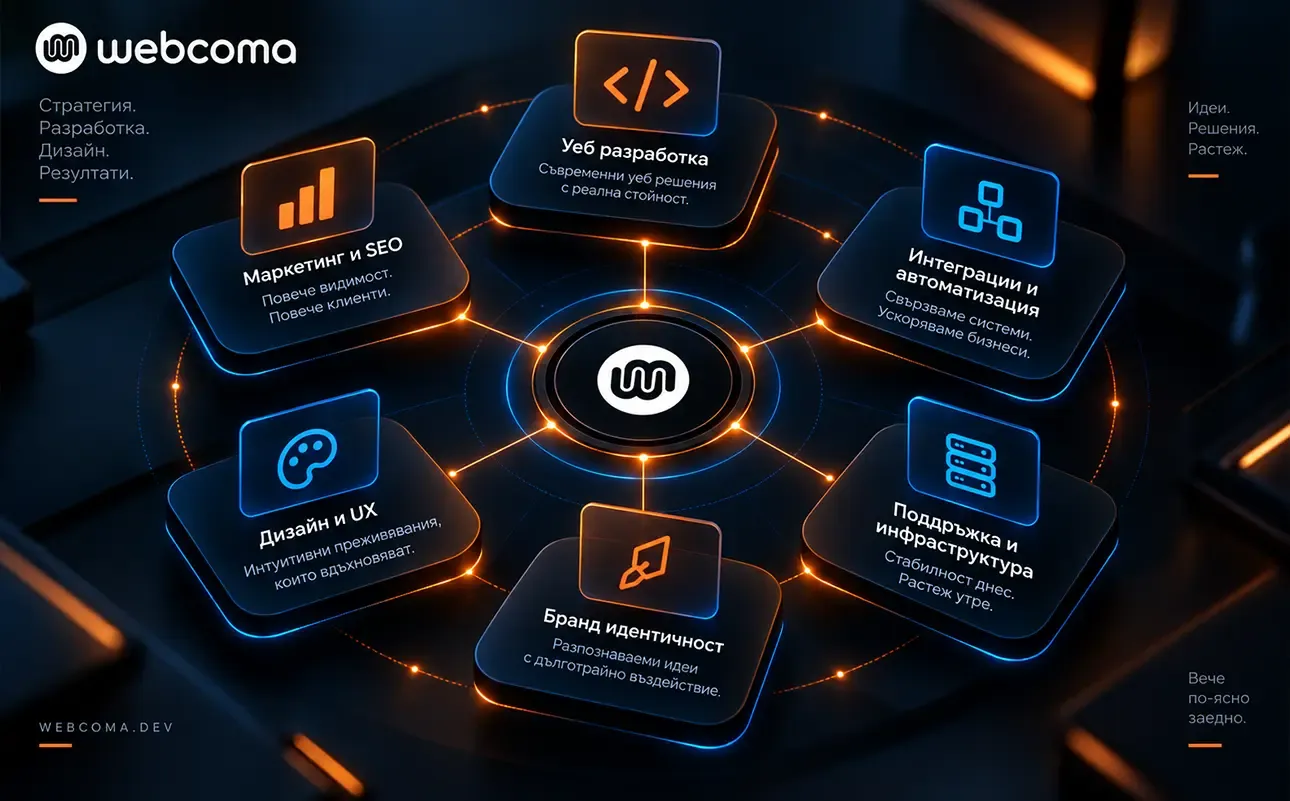

We organised WebComa’s services into six areas to make it easier to find a starting point for your task. The structure helps us begin a conversation. It is not a list of six packages every business needs to buy.
One company may only need image editing. Another may be working on a website that needs to exchange data with an internal system. These areas help us identify both the individual task and the work connected to it.
What each area covers
Web development
Web development covers corporate websites, online stores, landing pages and custom web systems. The common question is what a visitor or employee needs to be able to do.
Presenting a few services clearly is a different scope of work from building a request management system with user roles and specific business logic. Both involve web development, but treating them as the same task does not help anyone.
Integrations and automation
Integrations and automation deal with how information moves between tools and how recurring steps in a process are handled. The question might be “how does the order reach the right system?” rather than “what should the page look like?”
Before automating anything, we need to establish which data is exchanged, who is responsible for it and what should happen when something goes wrong.
Maintenance and infrastructure
Maintenance and infrastructure bring together ongoing technical care, monitoring and decisions about the environment in which a website runs. This area distinguishes new development from the responsibilities that continue after launch.
A technical difficulty does not always require a new website. Sometimes it makes sense to first review the existing setup and how it is maintained.
Marketing and SEO
Marketing and SEO concern how people find a business, the content they need and the channels used to reach them. This area includes SEO, advertising, email marketing and AIO / GEO work on content clarity.
Choosing a channel makes sense once the audience, the offer and the expected next step are clear. Having a website does not, by itself, determine which activities a business needs.
Brand identity
Brand identity includes a logo, a visual system and company materials. The aim is a consistent presentation that the business can use in its day-to-day communication.
This is a different task from organising a particular product page, although the two can meet within the same project.
Design and UX
Design and UX focus on interfaces, user navigation and visual content. This area includes UI/UX design, product images, advertising creatives and animated materials.
The context matters: what does the person need to understand, and what action should they be able to take?
The boundaries help, but the tasks remain connected
In an online store, for example, editing product images is design work. How those images appear relates to the interface. Updating product data may require an integration. Clients do not need to separate these parts on their own.
For Palisandar, we describe the WooCommerce platform development and the visual work on the product catalogue as separate projects. This shows how different tasks support the same online store.
The six areas make the conversation more concrete: what is the problem, which parts are needed now, and where do they depend on one another? They do not change our approach of starting with the task and defining the scope around it.
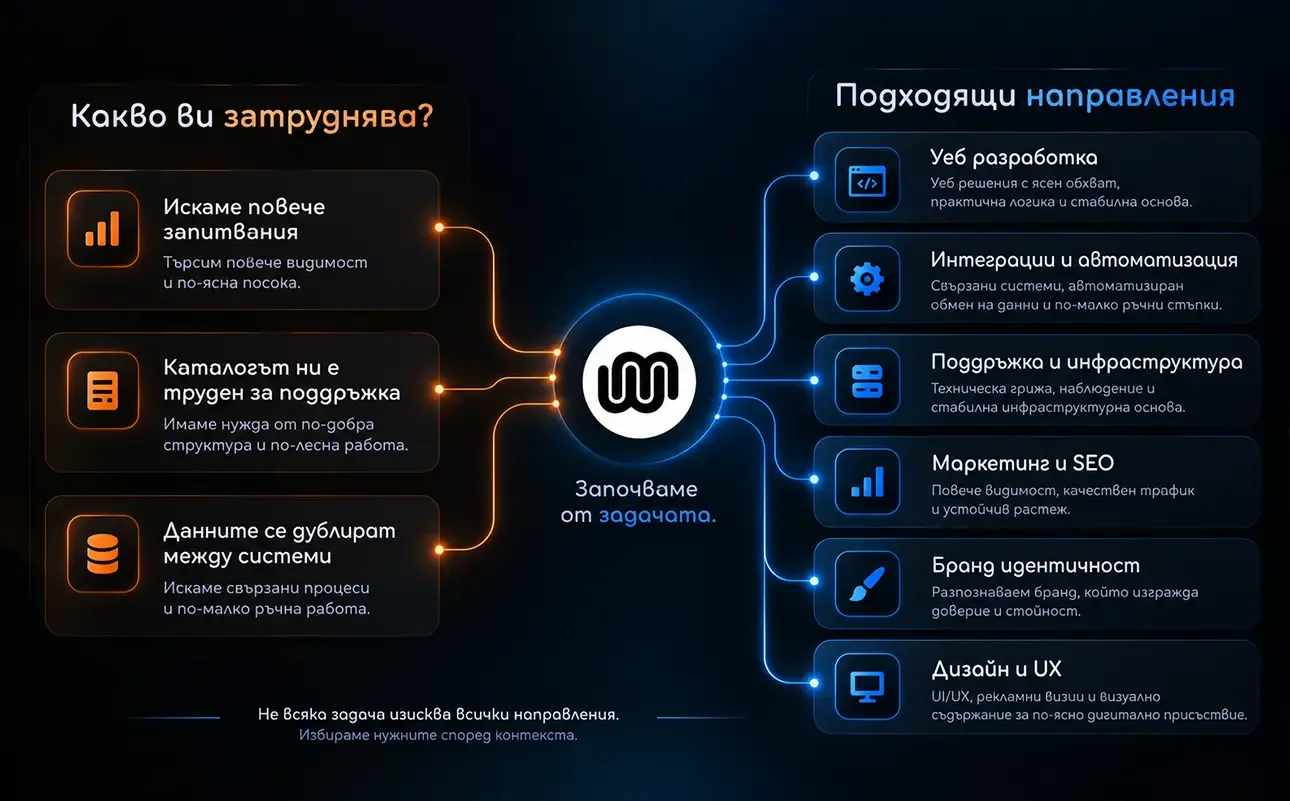
If you are unsure where to start, describe what is causing difficulty at the moment. That is enough for a first step, without having to choose a service by name.